Redefining Recovery: Innovation, Access & Excellence In Addiction Care
The landscape of addiction treatment is evolving, shaped by shifting reimbursement models, rising acuity, workforce constraints, and increasing expectations for measurable outcomes. The Addiction & SUD Summit brings together industry leaders from across the continuum of care to explore how organizations can adapt and lead in this moment of transformation.
The Summit will examine the future of substance use disorder treatment through a strategic lens, with a focus on expanding access, supporting the workforce, leveraging data and technology, and demonstrating value in an outcomes-driven market. Designed for executives responsible for growth, quality, and sustainability, this summit offers actionable insights and peer perspectives to help organizations strengthen performance to deliver more effective and equitable addiction and SUD care.
The New Path To Treatment: Navigating The Trends, Policies & Forces Reshaping SUD Care
Philadelphia rebuilt the route from street contact to treatment placement. The components: harm reduction outreach, arrest diversion, a 24/7 center with a courtroom inside it, policies that let medication start the same day, and the level-of-care standard that decides who qualifies and what gets paid. Providers sit at every handoff in that chain, receiving referrals or losing them.
Join this panel to hear from the leaders who directed those changes. They will discuss where the industry is moving, based on national trends and the policy shifts landing in addiction and SUD services next year, and what a provider organization has to do to hold its place in the referral chain.
Attendees will leave with:
▪ Which pieces of the Philadelphia model transfer outside Philadelphia, and what each one costs
▪ What a drug supply that turns over yearly does to your level-of-care mix and your length of stay
▪ Where your organization sits in that referral chain now, and what it takes to move up it
David Gastfriend, M.D.

An addiction psychiatrist, Dr. Gastfriend has held clinical, research, technology development, and policy roles. At Harvard, he directed Massachusetts General Hospital’s Addiction Research Program. As VP at Alkermes, he directed scientific communications on Vivitrol. His research led most U.S. states to endorse the American Society of Addiction Medicine (ASAM) Criteria. His 150 publications include The ASAM Criteria and Addiction Treatment Matching. His ASAM Criteria CONTINUUM® software is being adopted nationwide. He has consulted to the governments of Belgium, China, Iceland, Israel, Norway, Russia, and the US.
Nicole O’Donnell, CRS, BA

Daniel Teixeira da Silva, M.D., MSHP
Kurt August, MSW


Closing The Gap: Expanding Access Through Medication For Opioid Use Disorder (MOUD)
Opioid use disorder continues to impact communities across the country, and expanding access to Medication Assisted Treatment (MAT) remains one of the most effective strategies for improving outcomes and saving lives. This session will examine the operational, clinical, regulatory, and financial considerations involved in scaling MAT programs across diverse care settings.
Industry leaders will discuss how organizations are overcoming barriers to access, integrating MAT into broader treatment services, leveraging partnerships with health systems and payers, and addressing stigma that can limit adoption and engagement. Attendees will learn how innovative treatment models, data-driven care strategies, and workforce development efforts are helping providers reach more individuals with evidence-based opioid use disorder treatment.
Margery L. Stanton, LMHC
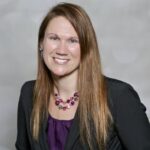
Margery Stanton is the President & COO of BestSelf Behavioral Health, where she has been part of the team for over 15 years. Across that time she has held a range of roles, each deepening her understanding of the agency’s mission and the people it serves. Beyond BestSelf, Margery is an adjunct professor at the University at Buffalo, where she is committed to supporting the next generation of behavioral health practitioners. At the heart of her work is a single goal: empowering everyone to be their BestSelf.
Jennifer Seib, LMHC, CASAC
Heidi Ginter, M.D., FASAM

Heidi Ginter, MD, FASAM is the National Medical Director of Addiction Medicine at Acadia Healthcare and Chief Medical Officer of CTC (Comprehensive Treatment Centers). Board-certified in both family and addiction medicine, Dr. Ginter has nearly two decades of experience treating substance use disorders.
Dr. Ginter earned her bachelor’s degree from Yale University, her MD from the University of Maryland School of Medicine and completed her family medicine residency at the University of Massachusetts Chan School of Medicine. Early in her career at the Edward M. Kennedy Community Health Center in Worcester, MA, she practiced the full spectrum of family medicine, including obstetrics, and was introduced to addiction medicine through managing methadone for incarcerated pregnant people with opioid use
disorder. This experience deeply impacted the trajectory of Dr. Ginter’s career as she became a passionate advocate for better substance use and mental health care for vulnerable, marginalized individuals.
As Dr. Ginter began trying to improve access to respectful, quality care, a key initiative in her early career was launching the first buprenorphine treatment program at her community health center. Dr. Ginter has since provided medical leadership across a range of settings, including opioid treatment programs (OTPs), inpatient withdrawal management, residential addiction treatment, outpatient office-based programs, and hospital addiction consult services. Her work has focused on building bridges between different levels of care, ensuring continuity and accessibility for patients.
In addition to her clinical leadership, Dr. Ginter is a nationally recognized speaker who advocates for reducing stigma and increasing public understanding of substance use disorders and their treatment. She envisions a future where everyone seeking treatment can access high quality, affordable, evidence-based care and whatever other resources they need to achieve recovery on their own terms, whenever and wherever they are ready.
Using Data & Technology To Improve Recovery Outcomes
Despite ongoing investment in technology and digital infrastructure, many SUD providers still struggle with fragmented workflows, disconnected systems, and limited reporting and visibility into outcomes. These gaps can directly impact the ability to support long-term recovery.
This session will feature findings from Cantata Health Solutions’ 2026 national survey of SUD providers, highlighting how organizations are leveraging data, EHR functionality, and other digital tools to address operational complexity and strengthen care delivery. Attendees will gain practical insight into where providers are struggling the most today, which operational and technology investments are emerging as priorities, and how organizations are working to build more scalable SUD programs.
*Lunch Is Provided!
Christy Winter, LMSW
Meeting People Where They Are: The Future Of Accessible, Integrated SUD Care
Telehealth and integrated care offer major opportunities for addiction treatment providers, but they also introduce operational, clinical, regulatory and engagement challenges that make implementation complex. For addiction treatment executives, the difficulty is often balancing accessibility and convenience with consumer safety, compliance, and quality outcomes.
This session will explore how addiction treatment providers are implementing integrated care to reduce barriers to care, extend services to underserved communities, improve consumer engagement, and create more flexible treatment pathways. Executives will hear lessons learned around technology adoption, regulatory considerations, workforce integration, digital engagement, and balancing virtual and in-person care to meet the changing needs of today’s consumers.
Philip Hutson